Perfect Jasmine Rice, the 10-10-10 Method
 Tomas Kauer - News Moderator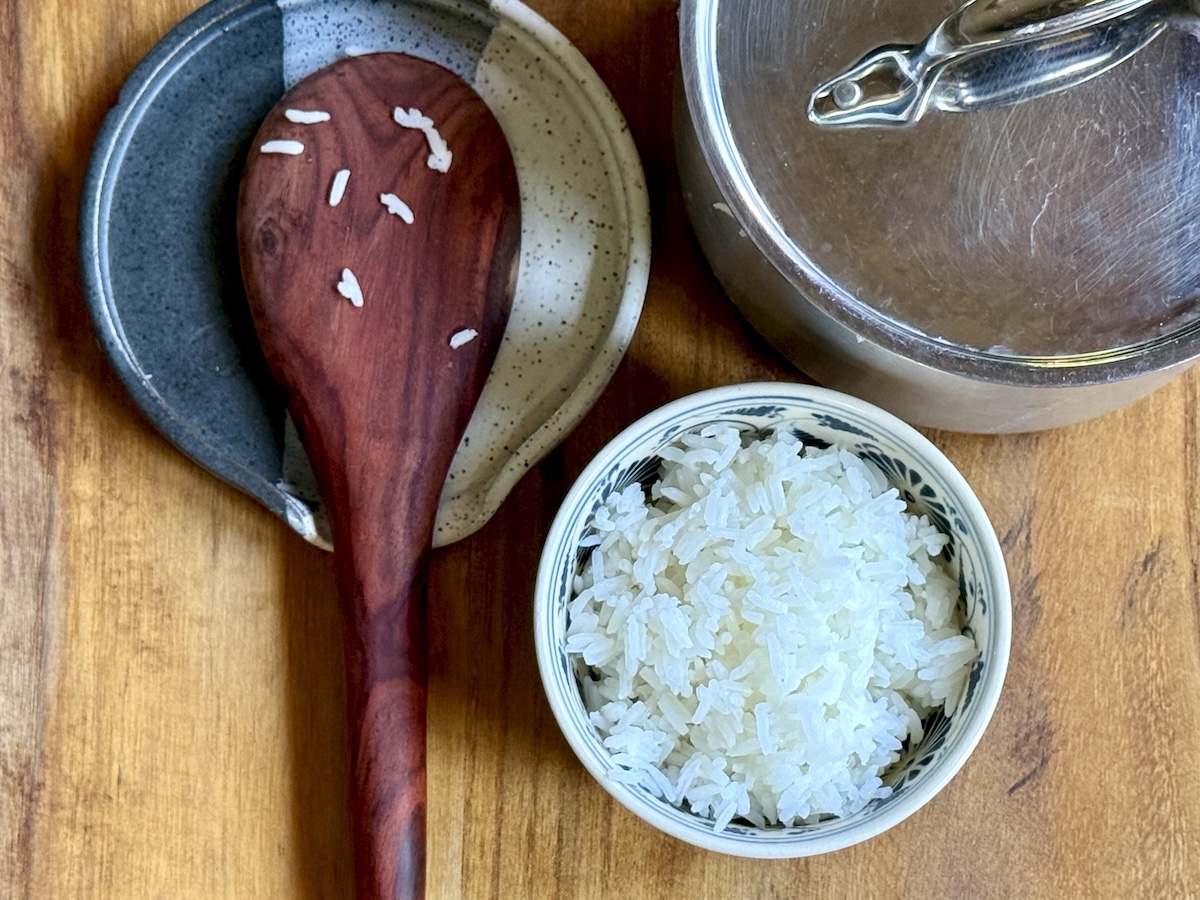
A perfect pot of rice may seem like an achievement but it's not a feat of daring do. It's simply a matter of practice. My mom taught me how to make rice in a basic National rice cooker but when I moved out on my own, I wanted to cook rice in a pot. It's a survival skill. Heck - what if you don't have electricity for the rice cooker? I've been cooking rice for over forty years and have learned well from my mistakes!
In this article, I'll share my easy-to-remember rice cooking recipe and rice troubleshooting tips. I will also bust some rice cooking myths to help you confidently cook a pot of rice in practically any situation.
My 10-10-10 perfect rice cooking method
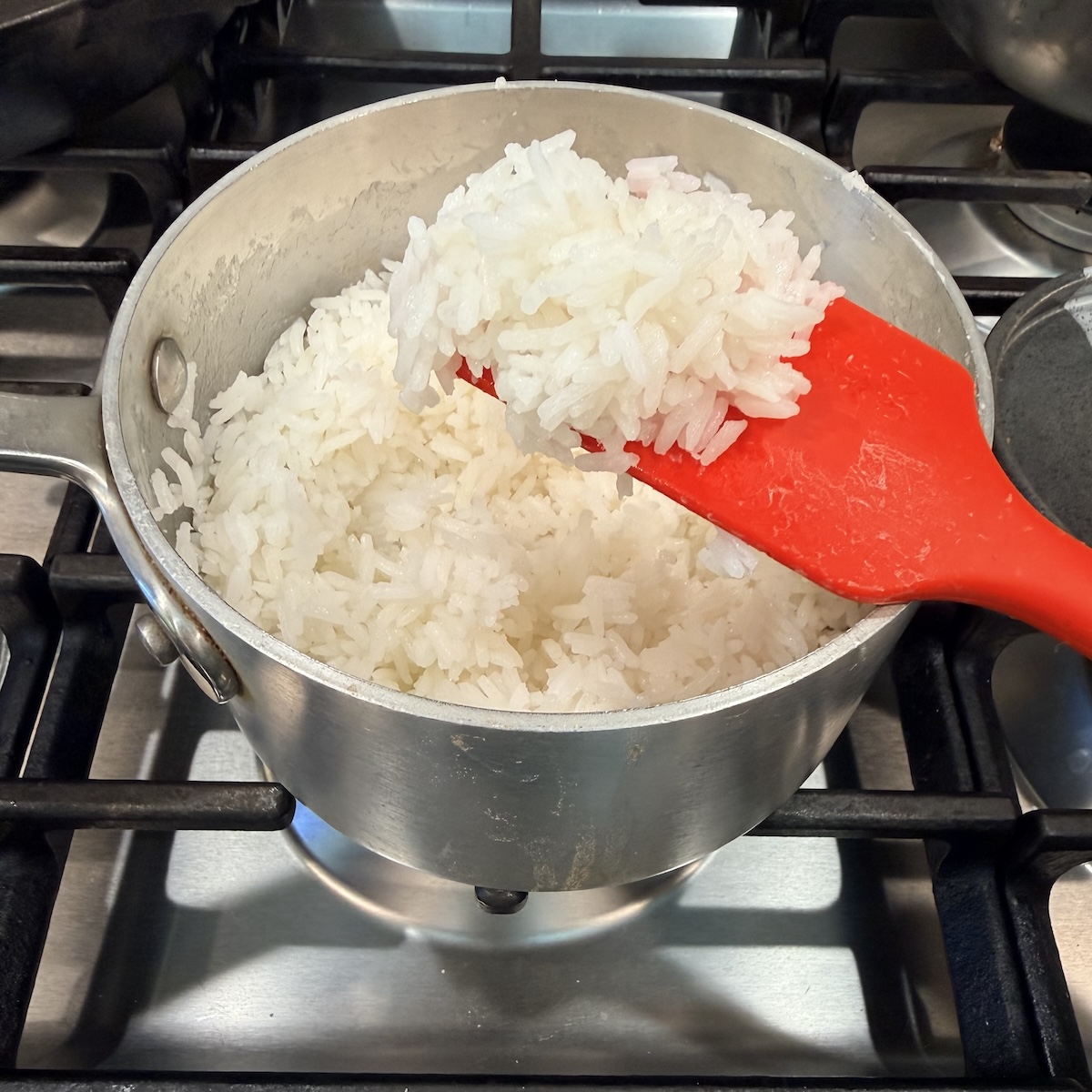
Boiling and draining rice like pasta rids the grains of too much of the sweet starches that define their comforting texture and flavor. I prefer an approach that involves a heavy pan and a gradual lowering of the heat in three (3) ten-minute increments. That's why I call it the "10-10-10" method. It works when you scale up the amount so long as you use a bigger pot.
Jasmine rice and pan selection tips
My default rice for everyday eating is white or brown jasmine rice grown in Thailand. I love with all kinds of foods, from Vietnamese restaurant-style grilled lemongrass pork and Cantonese char siu skewers to Sichuan mapo tofu and Burmese egg and okra curry. Well-prepared rice is a MVP in the kitchen.
Most people cook white jasmine rice so the recipe below is for white jasmine rice. Regardless, whether polished or whole grain, Thai-grown jasmine rice grains are uniform in shape, texture and taste. Stateside grown jasmine rice is not as aromatic or flavorful but you may opt for Lundberg or Jazzmen, if you like. When my family first came to America, we cooked Texas long-grain rice!
As for the pan, use a heavy pot with a lid that will sit tightly on top. You want good heat circulation to cook the grains evenly. My go-to pans include an 1 ½-quart saucepan, 2-quart small soup pot, and a 2 ½-quaet brasier pan.
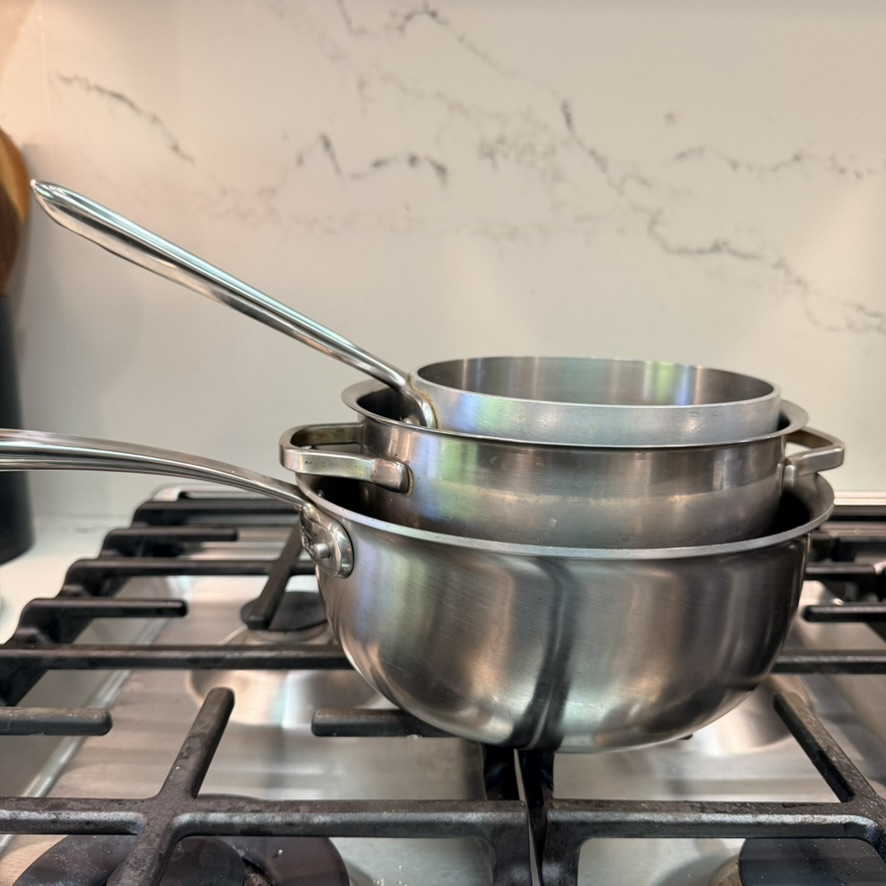
Jasmine rice-to-water ratio chart
To yield grains that aren't too firm or too soft, opt for a 4-to-5 ratio of rice to water. That's to say, for every 1 cup (190g) of raw rice, use 1 ¼ cups (300ml) water. To scale up, use these measures:
Serves Rice Water Pot size Yield 2 or 3 people 1 cup | 190g 1 ¼ cup | 300ml 1 ½-2 qt | 1.5-2L 3 cups 4 to 6 people 2 cups | 380g 2 ½ cups | 600ml 2-3 qt | 2-2.8L 6 cups 6 to 8 people 3 cups | 570g 3 ¾ cups | 900ml 3-4 qt | 2.8-3.8L 9 cups
Salt isn't typically added to plain rice because other dishes will season it at the table.
Rice cooking myth busting
There's a lot of fear about cooking rice because there are too many "rules" about it. I break many rules to making perfect rice.
- Rice myth 1: Wash rice until the water runs clear. The water never runs clear when you're cooking Jasmine rice. I wash the grains about three times to remove surface starch and yield better flavor. Draining the rice in a mesh strainer ensures more removal of starch, if that's your goal!
- Rice myth 2: Measure water by your knuckle. How much water you use depends on your pot, the amount of rice being cooked, and your taste. Measure water with a measuring cup and cook the rice in the same pot. Over time, you'll be able to eyeball the rice.
- Rice myth 3: Don't lift the lid before the rice is done. You can lift the lid when the rice is cooked in a solid, heavy pot. In the olden days when rice was cooked in clay pots and using rice straw, the heat was harder to control. Modern pots make it easier so go ahead and lift the lid! You will not ruin the rice.
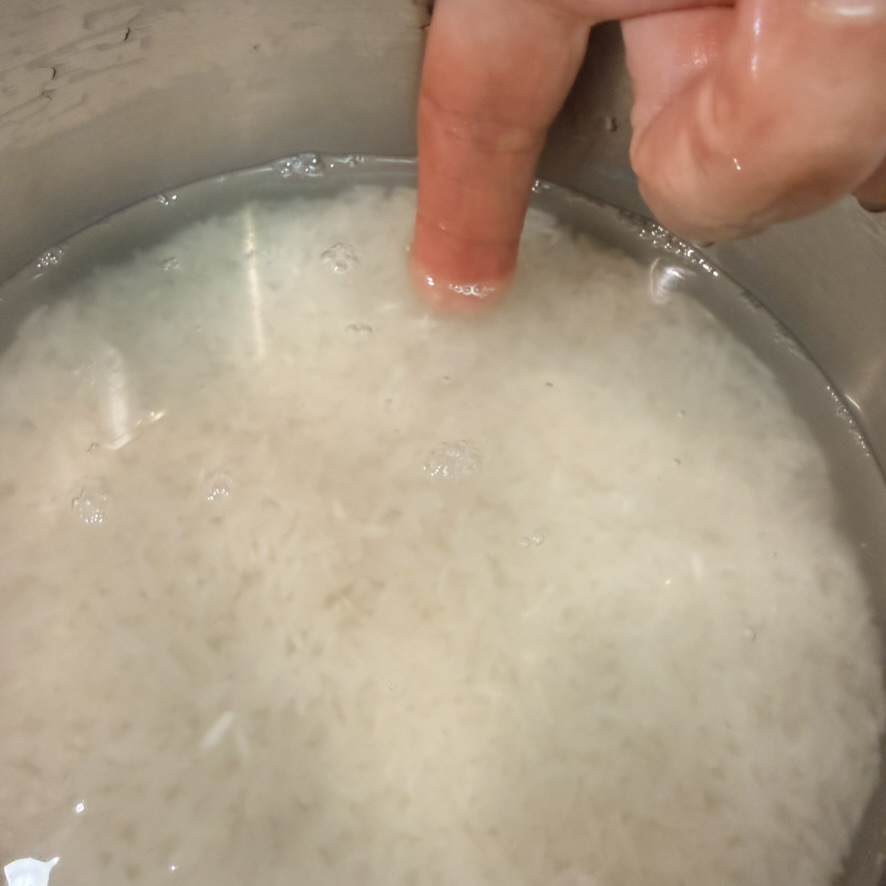
Only ½ a knuckle's worth of water!
Go ahead and lift the lid!

How to fix dry or mushy jasmine rice
When you fluff your finished rice, there may be a Goldilocks moment when you want to tweak the rice or it didn't cook quite right. How to remedy the rice:
- Shoot. The grains are too firm and dryish. Sprinkle on water, fluff to incorporate, then cover. Set the pot over low heat arm for 10 minutes to hydrate; then rest about 5 minutes, then re-fluff.
- Yikes! The rice is mushy! Eat it up or add broth to it and cook it into porridge. Tweak your next batch by decreasing the water by 1 tablespoon per 1 cup (190g) of raw rice.
Tinker to find the best ratio for your tastes and your rice. Write down your ratio for future batches.
Jasmine Rice, the 10-10-10 method
Ingredients
- 1 cup | 190g white jasmine rice or similar type of long-grain rice
- 1 ¼ cups | 300ml water
Instructions
- Wash the rice: Put the rice in a small (1 ½ to 2-quart | 1.5 to 2L) heavy pot and add water to cover by about 1 inch (2.5cm). Vigorously stir with your fingers to loosen surface starch then pour off the water (I save it to water our garden). Repeat two or three times, or until the water is nearly clear -- it will never be crystal clear. Dump the rice into a mesh strainer, shake to expel excess water, and return the rice to the pan.
- Cook for 10: Add the 1 ¼ cups (300ml) water to the pan. Bring to a boil over high heat, stirring now and then with a silicone spatula or chopsticks to prevent clumping. Lower the heat slightly to maintain a brisk simmer for 1 to 3 minutes, stirring often to scrape bottom and circulate the grains, until glossy on top. (It's normal for a few craters to form.) Decrease the heat to low, cover the pan, and cook for 10 minutes.
- Rest for 10, fluff, rest for 10: Turn off the heat. Leave the rice to gently cook on the burner's residual heat or 10 minutes. Uncover, fluff with chopstick, a fork, or spatula to circulate the grains. Re-cover and let rest again for 10 minutes to firm up the grains and finish cooking. Keep covered and cozy warm for up to 30 minutes. Re-fluff before serving.
Notes
The post Perfect Jasmine Rice, the 10-10-10 Method appeared first on Viet World Kitchen.